
Naqsh
A fold-and-stamp puzzle game for phones, Arabic first.
- Role
- Game design, visual system, 3D
- Platform
- iOS and Android
- Language
- Arabic first
- Status
- In progress
Naqsh is a puzzle game built around one moment: a folded sheet opens and shows what a single stamp made. I designed the rules, the screens and the objects so that everything leads to that moment and nothing gets in its way.
Designing the fun
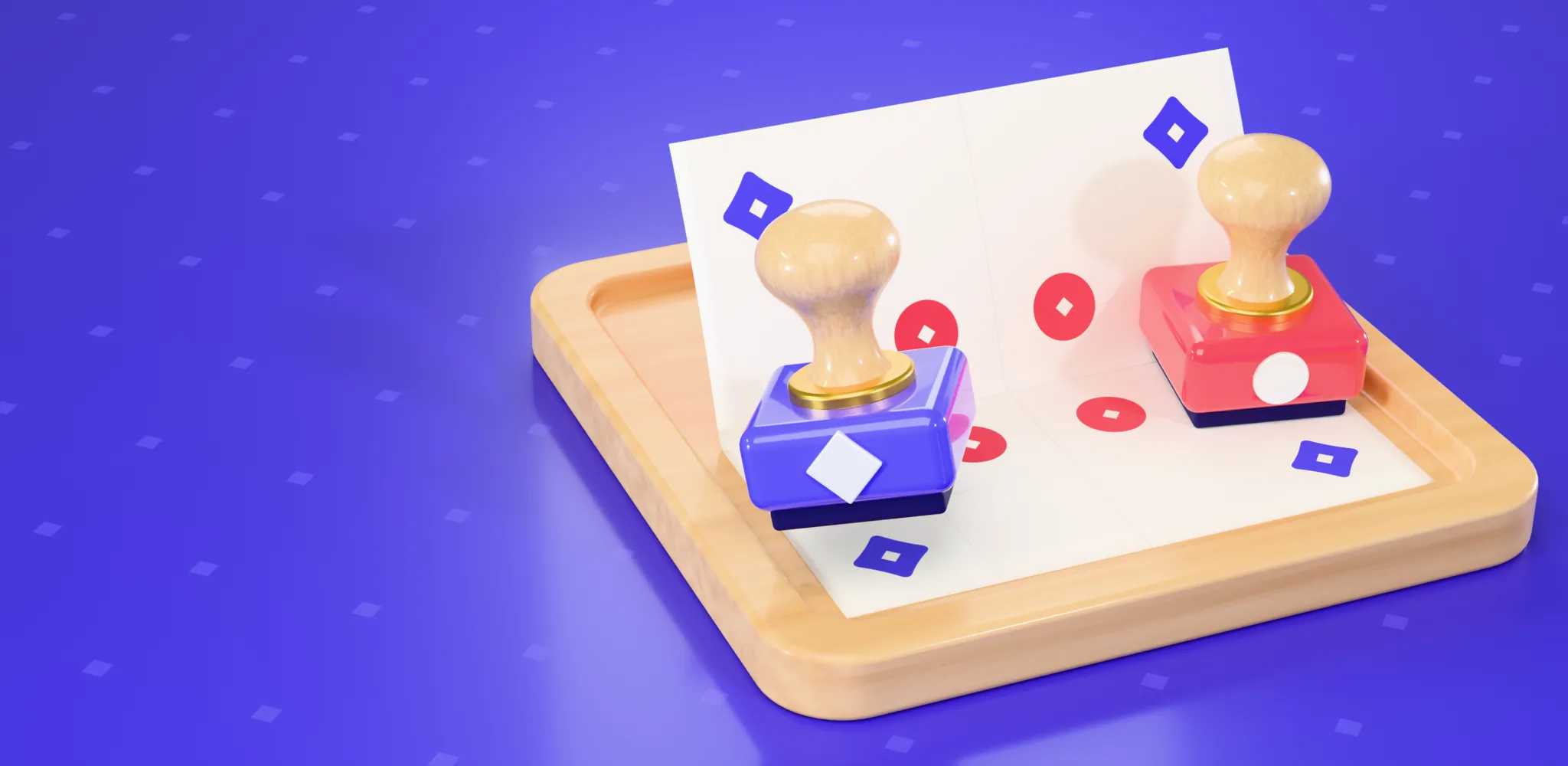
I started from the feeling rather than the feature list. In game-design terms, the aesthetic I wanted was discovery: the small jolt of seeing something you made but could not fully picture. Folded-paper cutting gives exactly that, so the mechanics had to be few and physical: fold, press, unfold.
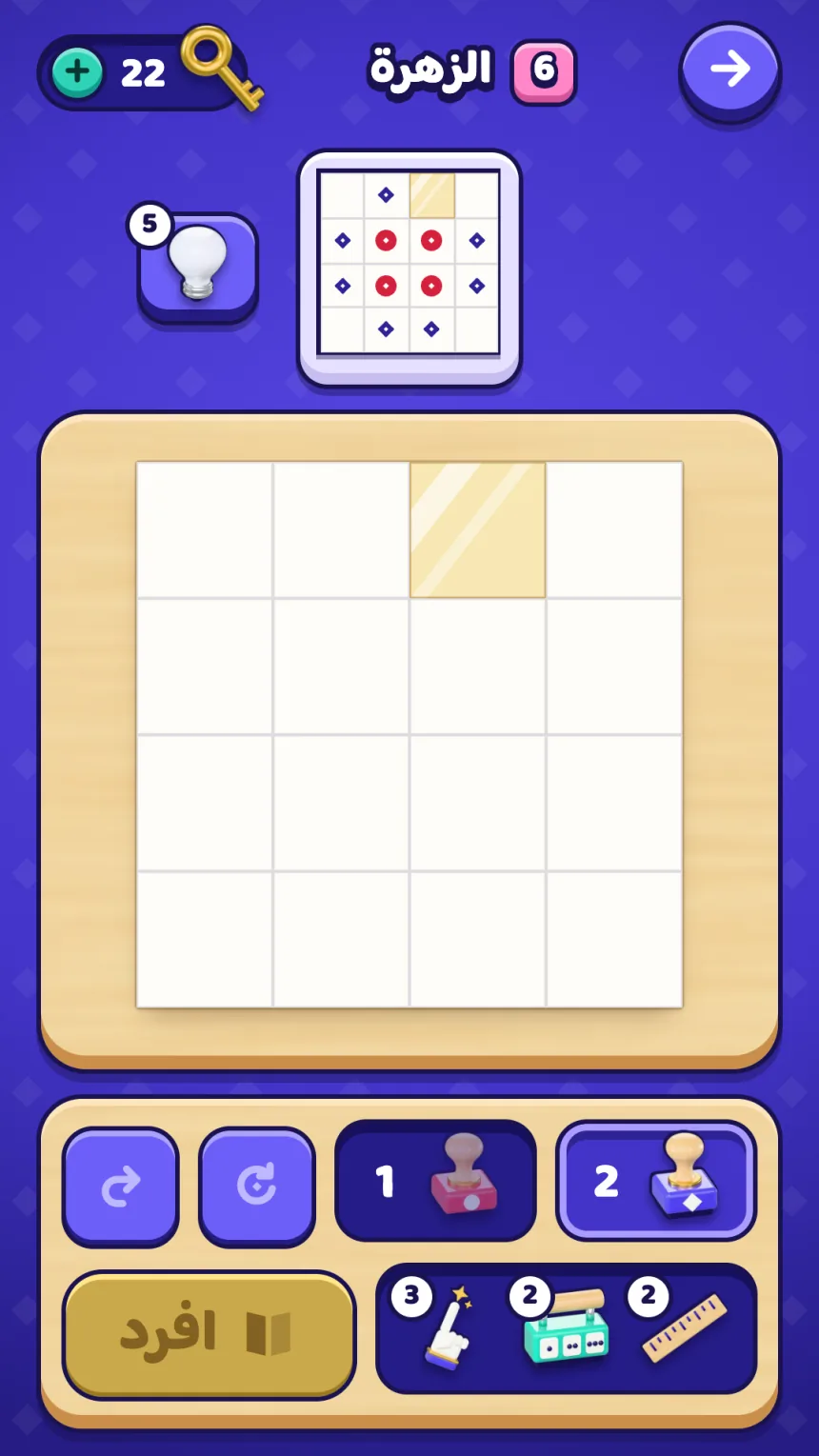
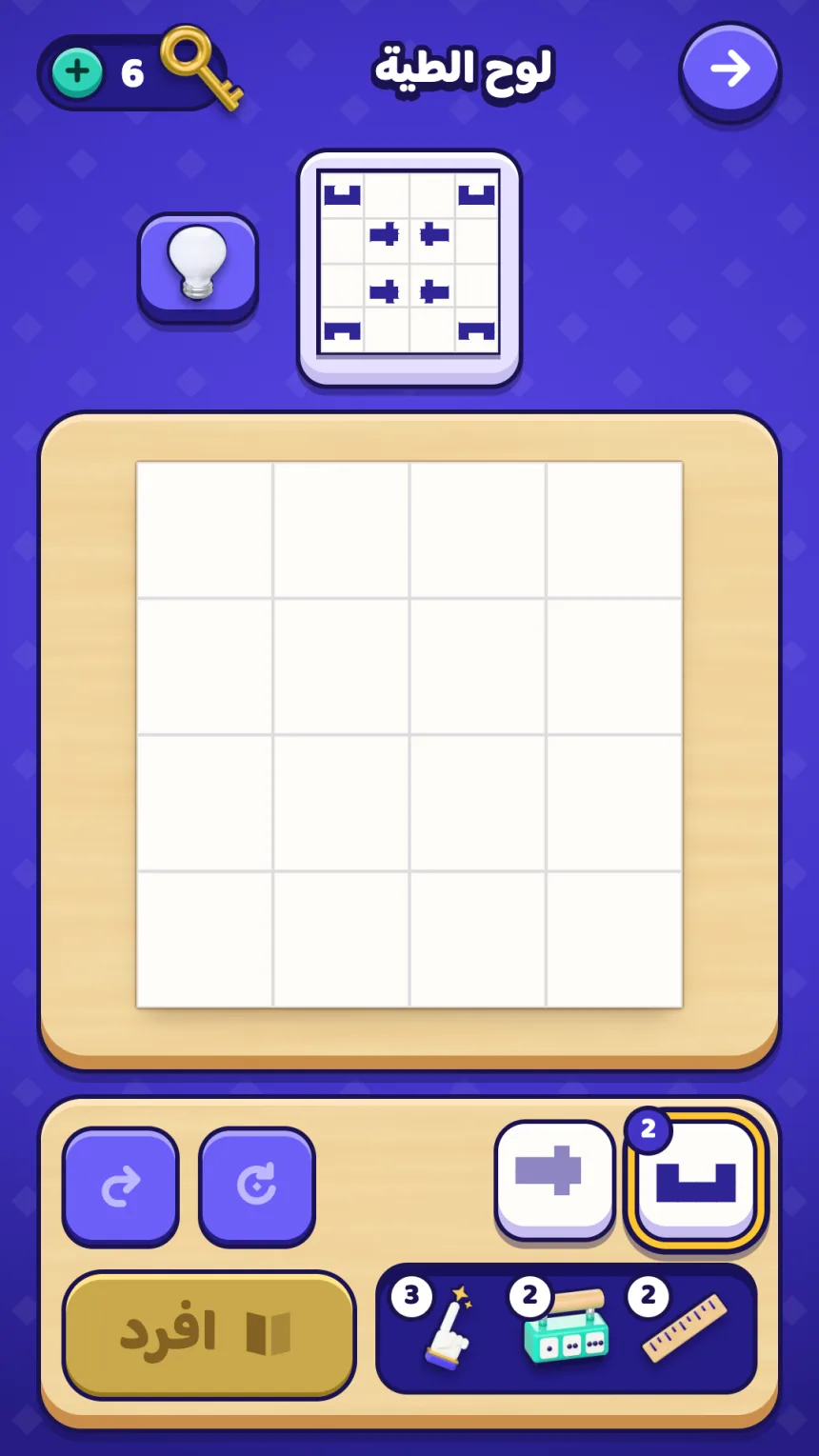
The core loop is predict, act, verify. The player folds the sheet and pictures where the marks will fall; one press goes through every layer and makes two, four or eight marks; the unfold confirms or breaks the picture in their head. A right prediction feels earned, and a wrong one is cheap and teaches something, so the loop invites another try instead of punishing.
Leverage is what makes it satisfying. One small action produces a pattern far bigger than itself, and a ×N badge on the stamp makes that power visible before the press, so the player is always aware of how much a single decision is worth.
The game shows, the player judges
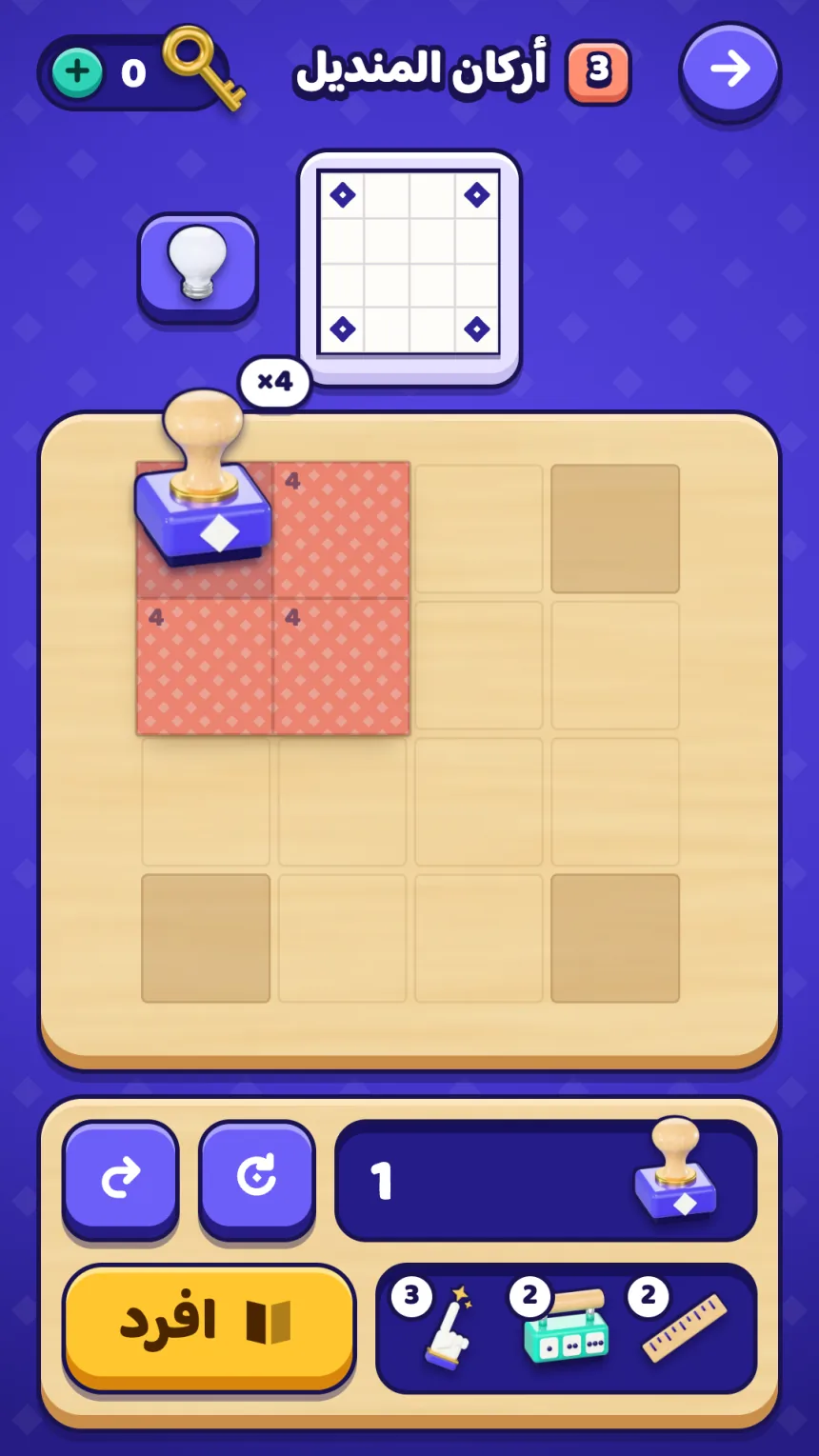
The hardest balance was how much to show. If nothing is shown, a folded sheet is guesswork, because you cannot see which layer is on top. If everything is shown and judged, the thinking disappears and the unfold becomes a formality. So I split visibility from judgement: the game always shows where a press will land, and never says whether it is right. Only the unfold judges.
That shaped the interaction. A tap rests the stamp and shades the squares its marks will reach; a second tap presses. Phones have no hover, so resting gives the player a moment to look before committing, the same way on touch and mouse. Folding is direct manipulation: drag anywhere on the sheet, the flap lifts with the finger, a dashed crease shows where it will bend, and a short drag springs back.
Help stays the player's choice and never lowers the score. Difficulty is a curve, not a wall: each stage introduces one idea, such as wax, a second ink or torn sheets, teaches it in a small lesson, and keeps it in play afterwards, so the challenge grows with the player's skill and keeps them in flow.
A system, not a scene
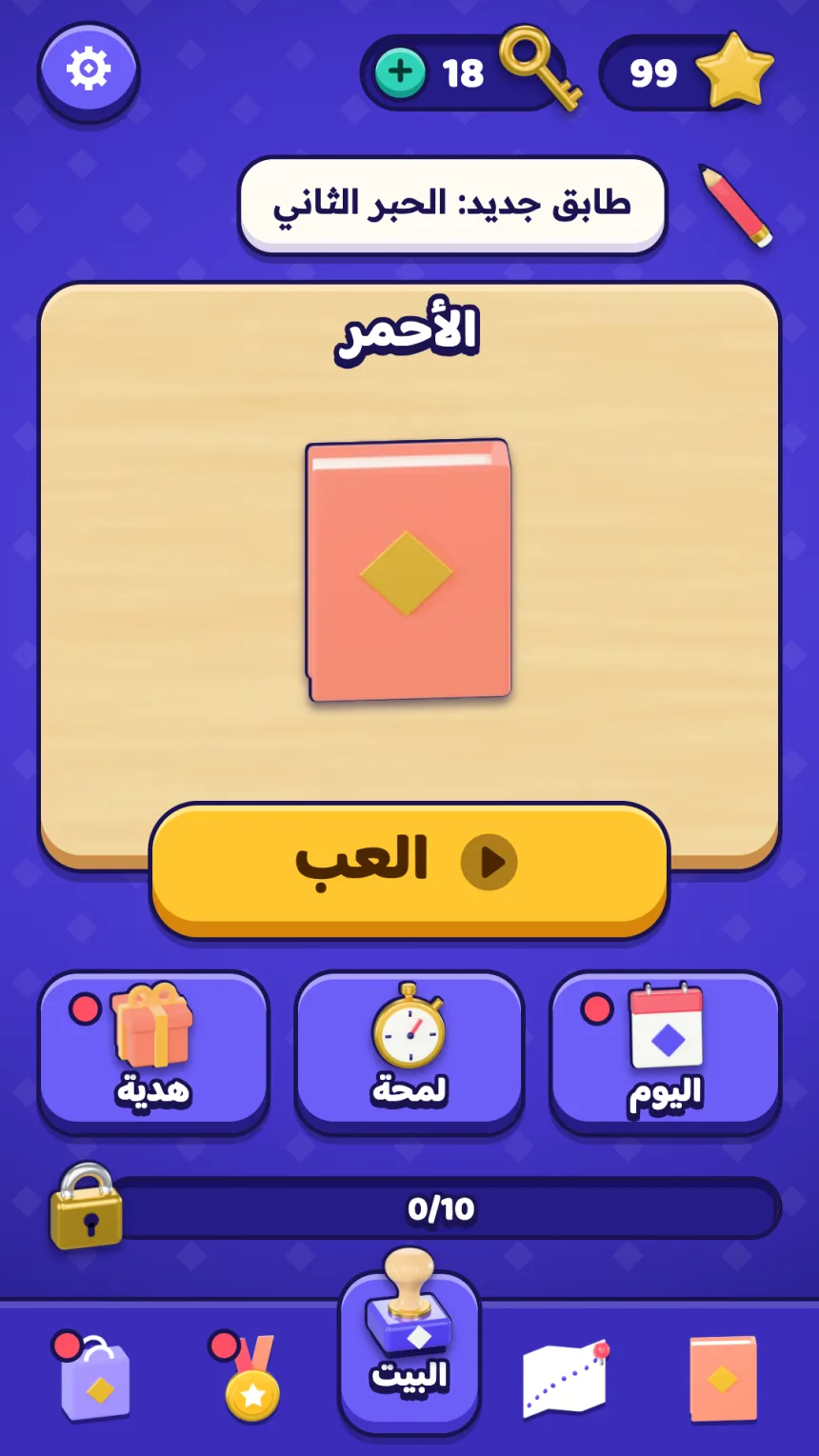
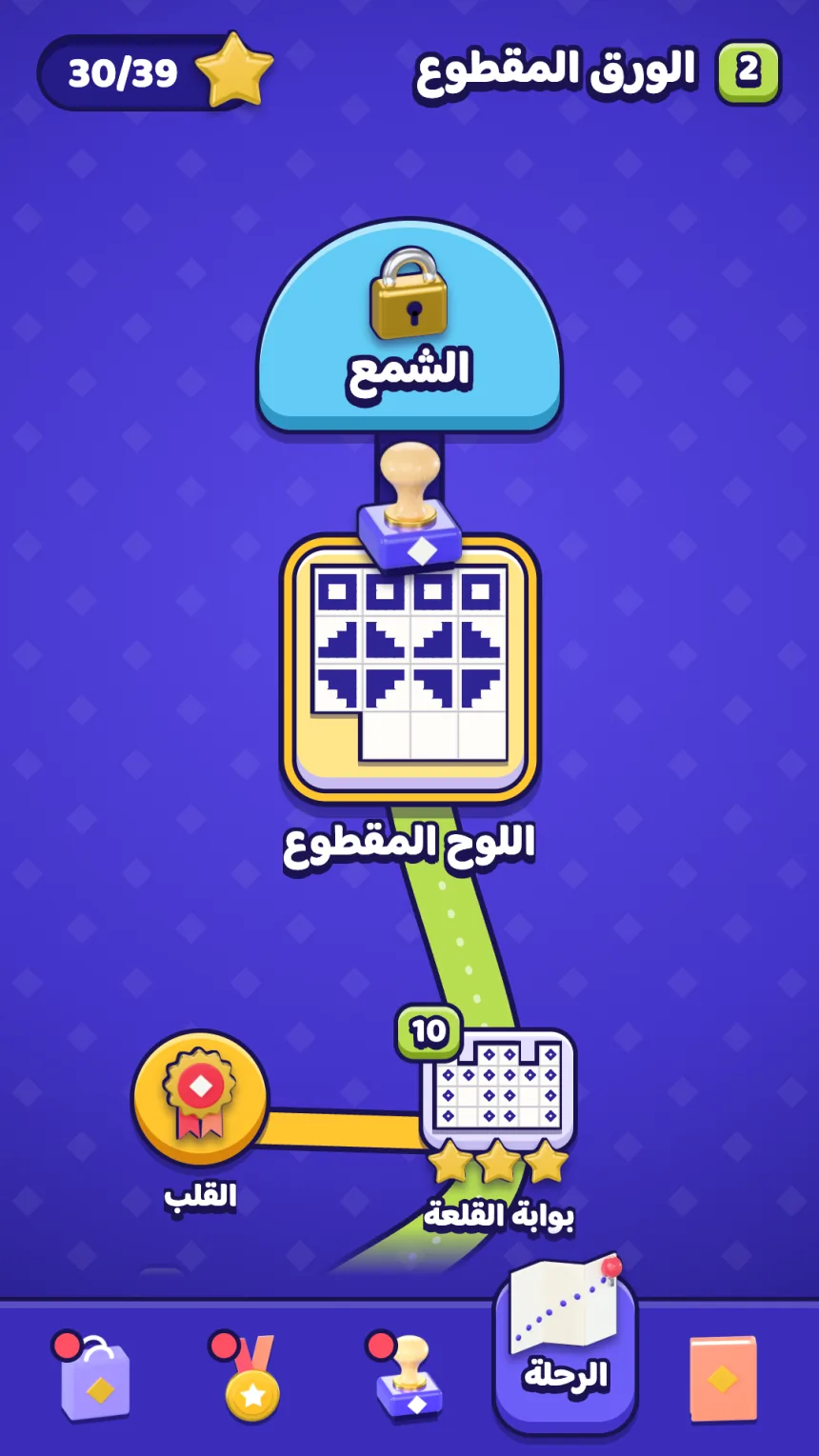
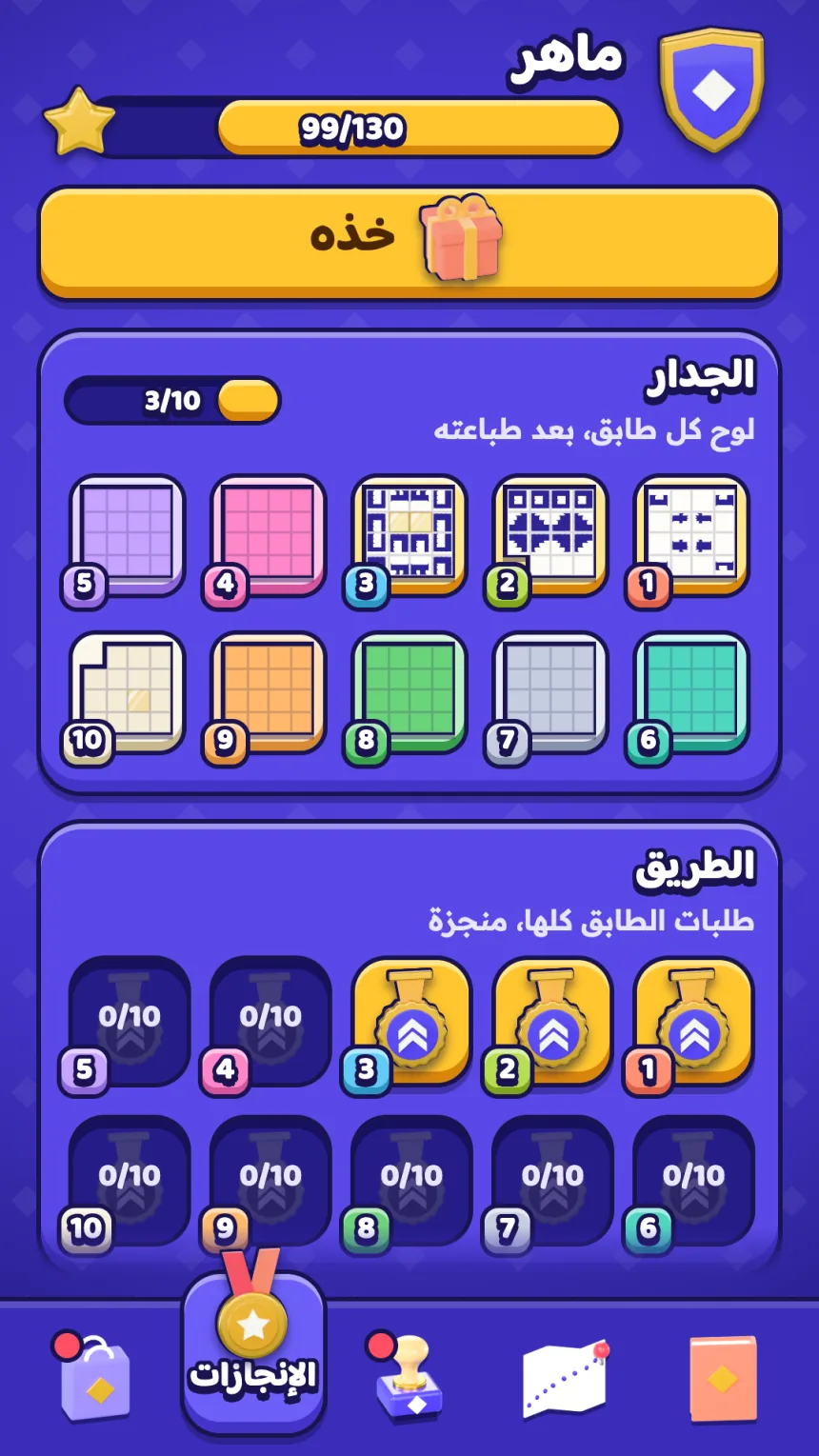
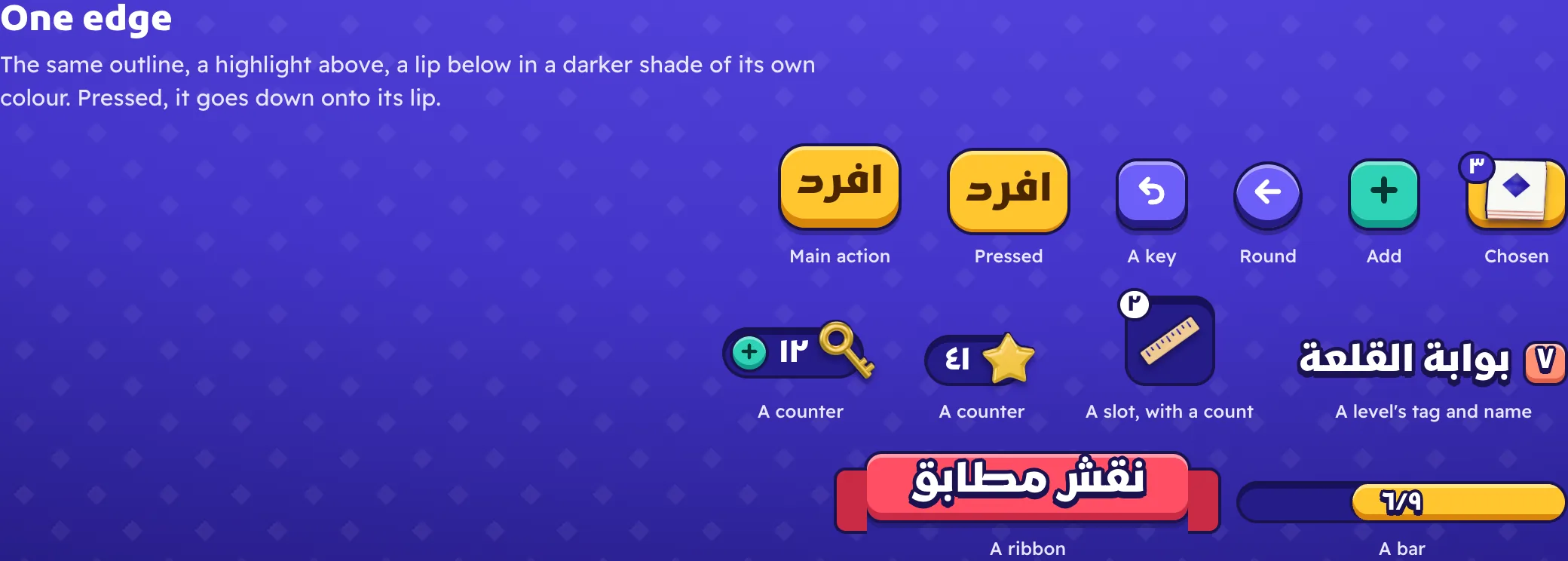
For the look, I wanted one coherent world in which the board, the stamps, the rewards and the navigation are parts of one system. I designed it as an opened stamp set: everything sits in a slot and is built the same way, with one outline, a highlight on top and a lip below in a darker shade of its own colour. Pressed, a key sinks onto its lip, so every control signals that it can be pressed.
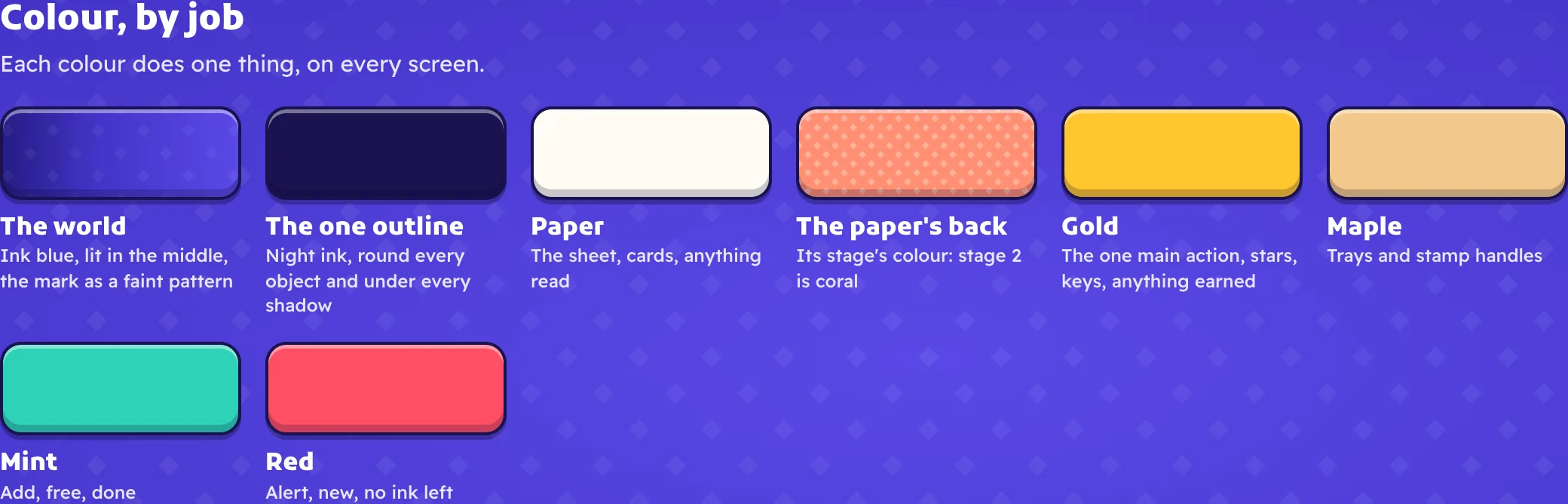
Colour has jobs and never swaps them. Gold is the one main action and anything earned, mint is add and free, red is alerts and new, white is paper and anything to read. The player learns the meaning once and reads every screen faster afterwards.
Objects instead of words
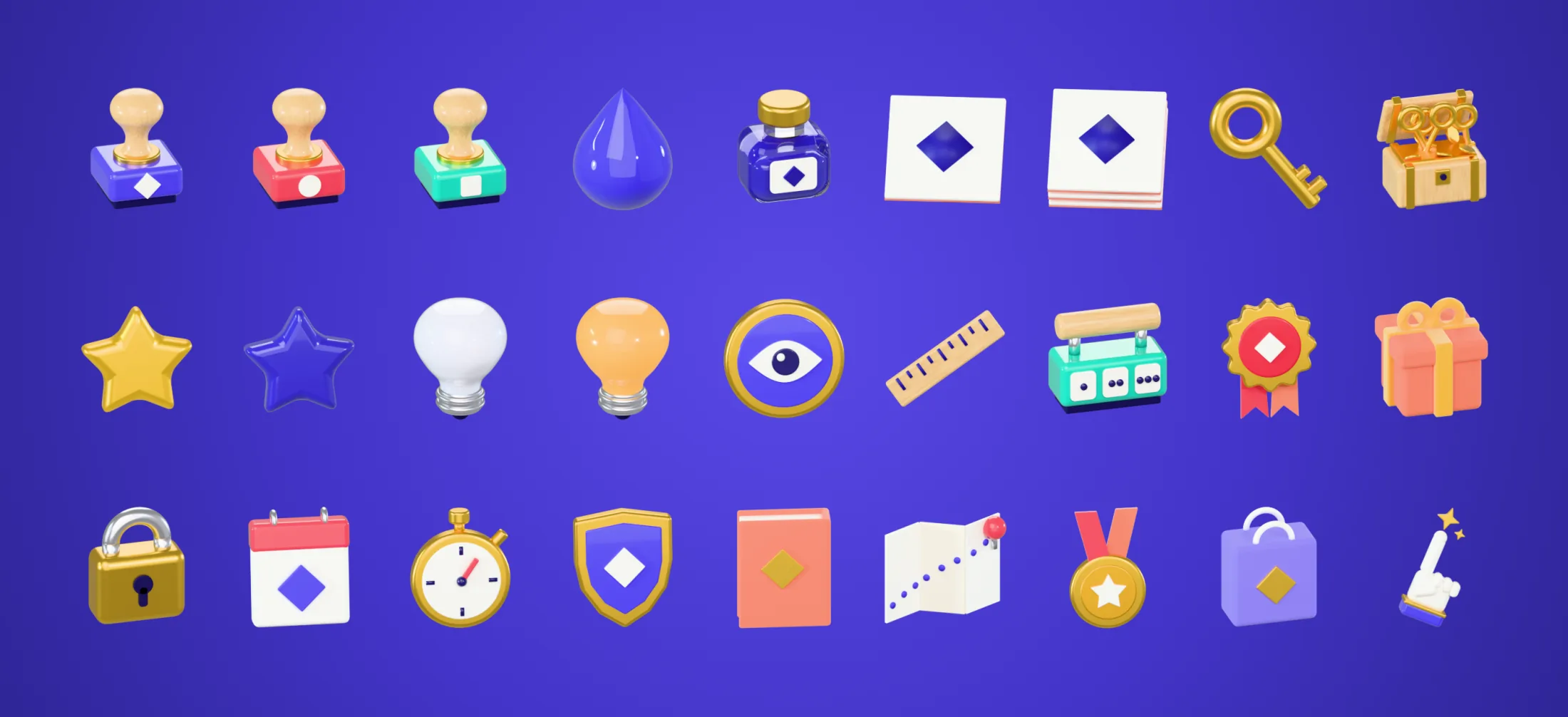
The game is Arabic first and travels to other languages, so I let objects carry meaning wherever they can. Stamps, ink, keys, the lamp, the tools and the tabs are objects the player recognises instead of labels they have to read. I modelled them in Blender and rendered them in one studio under one light, in maple, brass, lacquer, paper and glass, so they belong to the same world.
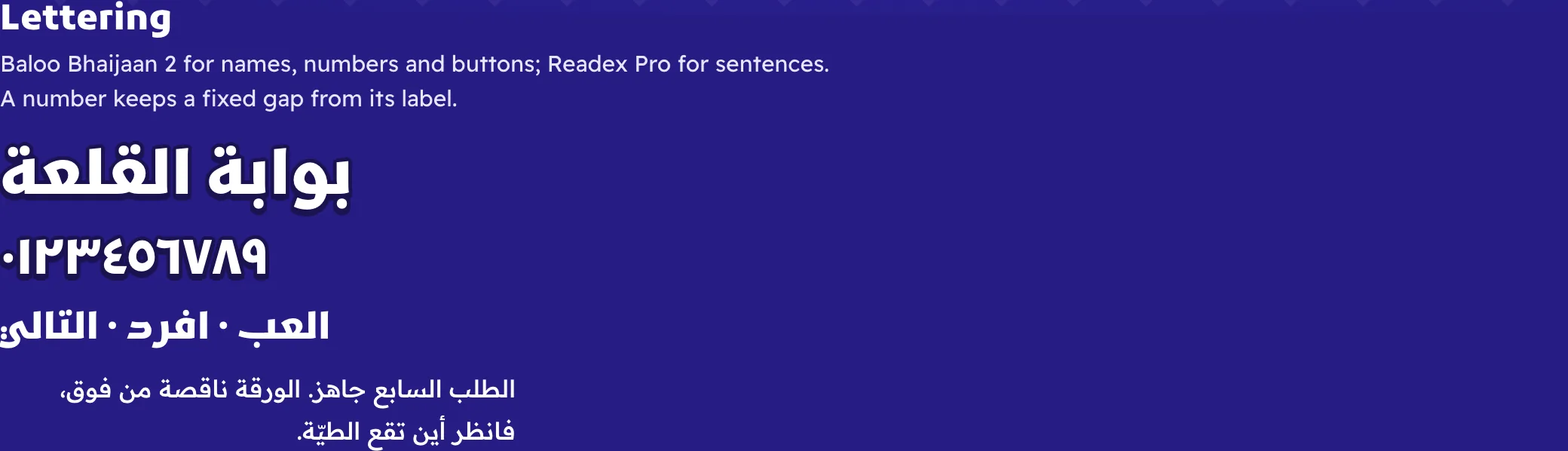
Words appear only where an object cannot speak: a level's name, the one main button. Names, numbers and buttons use Baloo Bhaijaan 2, with its outline built from hard shadows because a drawn stroke breaks Arabic letterforms; sentences use Readex Pro for legibility.
Feel
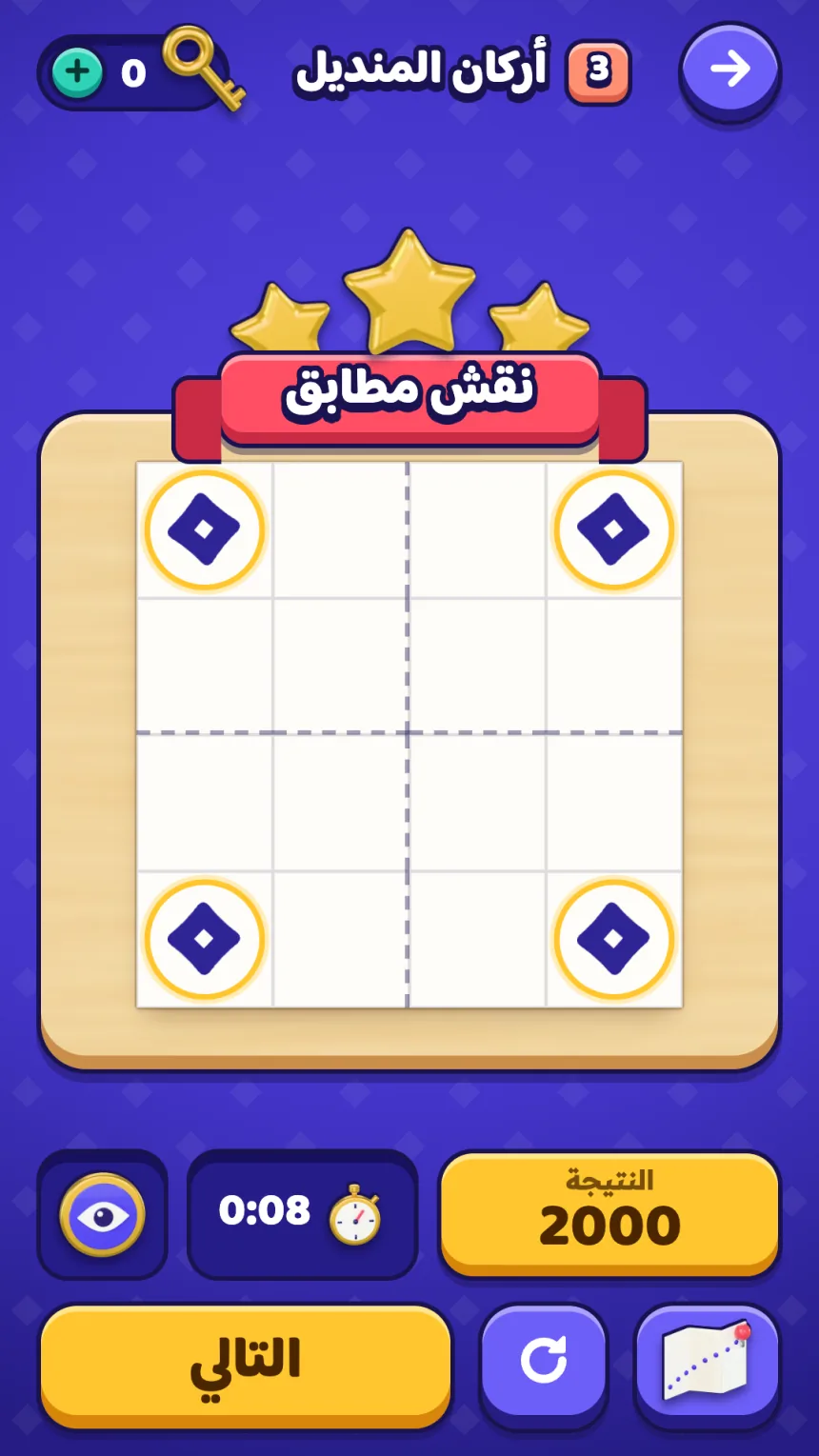
The unfold is the one orchestrated moment: the sheet opens fold by fold in reverse, each layer laying flat with its own paper sound, before the result is laid over the order. Everything else simply answers a touch. Sound comes from the things themselves, paper, wood and brass, rather than jingles, and haptics follow the same logic: light ticks as a fold snaps, a heavy thump for the stamp.
Small placements matter as much. After a solve, the Next button lands exactly where Unfold was, under the same thumb, so the rhythm of play never breaks.